

Solar proposal fine print is the detailed contractual language that defines every cost, warranty, production assumption, and legal obligation tied to your solar installation. Most homeowners focus on the monthly payment and the panel count. The fine print is where the real commitment lives. Industry terminology calls this the solar energy agreement or solar installation contract, but regardless of what the installer calls it, the terms inside determine whether your investment performs as promised or costs far more than expected. Solarrepairtoday reviews these documents daily and consistently finds clauses that homeowners never noticed before signing.
What is solar proposal fine print and what does it cover?
Solar proposal fine print refers to the specific terms and conditions embedded within a solar installation contract, beyond the headline numbers shown in a sales presentation. A complete solar contract must define at least five key areas: exact equipment specifications, a transparent price breakdown showing both total cost and monthly payment, detailed production estimates, warranty terms with workmanship coverage of five or more years, and dispute resolution or termination processes. Each of these areas carries risk if left vague or incomplete.
Equipment specifications matter more than most homeowners realize. The fine print should name specific panel and inverter models, not just brand families or wattage ranges. A proposal listing "Tier 1 panels" without naming the manufacturer or model number gives the installer flexibility to substitute equipment after signing. Detailed proposals include system design with specific panel and inverter models, production software used, lifetime cost projections, and clear pricing components. Vague proposals often signal inexperience or risk.
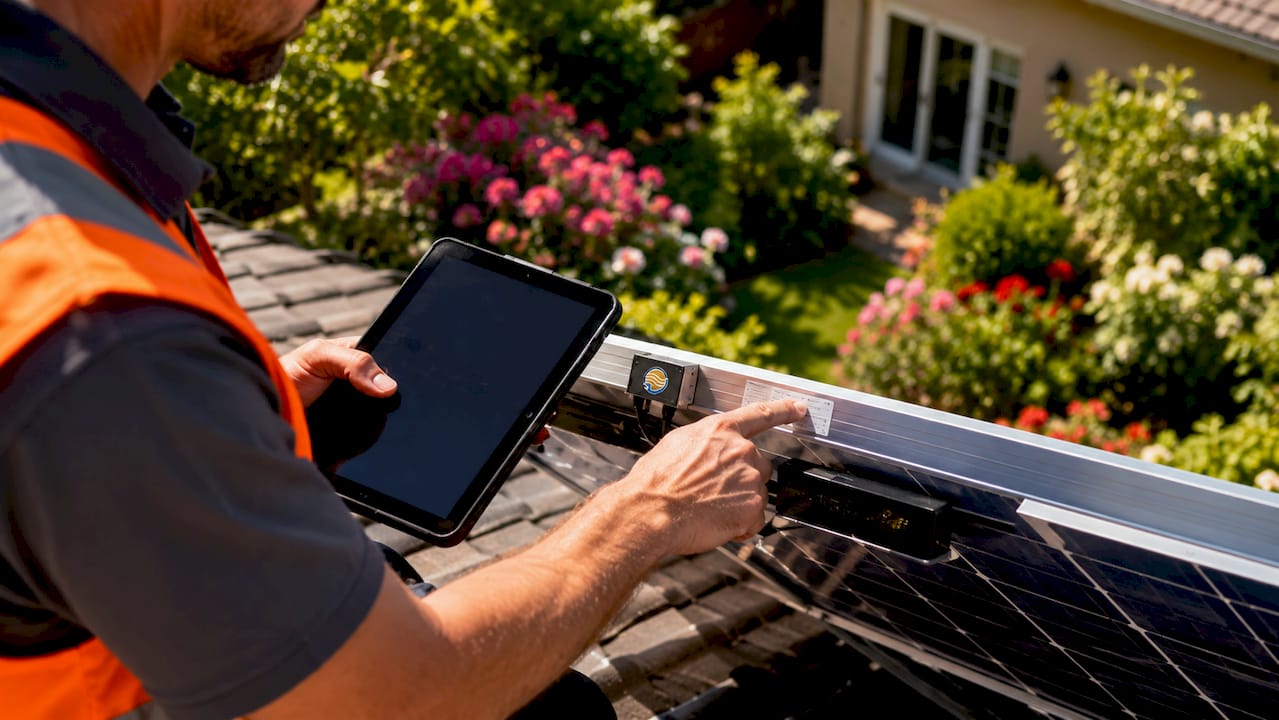
Production estimates are another area where fine print separates marketing from reality. The contract should disclose which software generated the estimate, such as PVWatts or Aurora Solar, and what assumptions were used for shading, tilt, and local irradiance. Without this disclosure, you have no basis to hold the installer accountable if the system underperforms. Clear contract clauses specifying dispute resolution and contract termination rights reduce homeowner risk and help avoid costly legal conflicts.
Pro Tip: Request a copy of the full contract before the sales appointment ends. Any installer who refuses to provide documents for take-home review is a red flag worth noting.
Key elements to confirm are present in your solar agreement fine print:
- Exact panel make, model, wattage, and quantity
- Inverter type, brand, and model number
- Total system cost in both cash and financed amounts
- Production estimate with software name and assumptions disclosed
- Workmanship warranty duration and what it covers
- Equipment warranty terms for panels and inverters separately
- Dispute resolution process and governing jurisdiction
- Cancellation rights and any associated penalties
How to identify hidden fees and financial traps in solar contracts
Monthly payment is a cash-flow metric, not a value metric. Installers frequently use it to obscure high dealer fees or unfavorable loan terms. A $200 monthly payment sounds manageable, but if the loan carries a $8,000 dealer fee rolled into the principal, you are paying significantly more than the system's market value over the loan term.
Dealer fees, also called origination fees, are one of the most common hidden costs in solar financing. These fees compensate the installer for using a third-party lender and are typically added to the loan principal rather than disclosed as a line item. The result is a financed amount that exceeds the cash price by thousands of dollars. A total cash price should always be provided alongside financed pricing to allow a clear, apples-to-apples financial comparison. If your proposal only shows a monthly payment, ask for the full financed total and the cash price before proceeding.
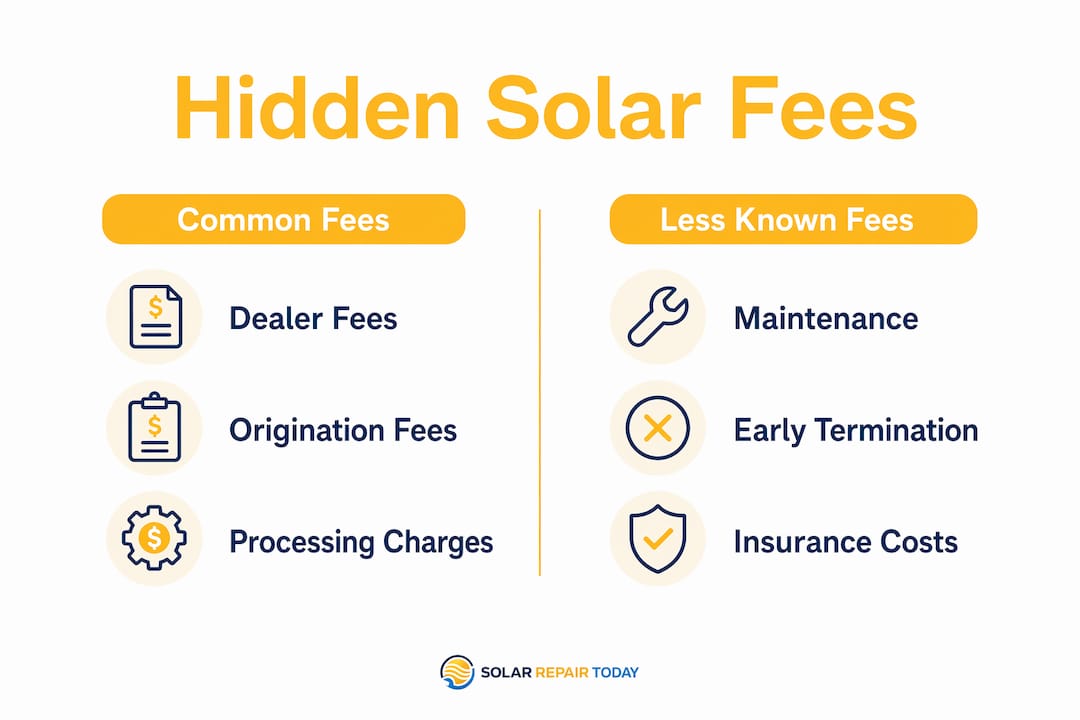
Escalator clauses are another financial trap buried in solar lease and power purchase agreement (PPA) fine print. These clauses increase your monthly payment by a fixed percentage each year, typically between 2% and 3%. Escalator clauses increasing payments annually can significantly increase the total cost over a solar lease or PPA term. Even a 2% annual escalator compounds over a 20-year agreement and can eliminate most of the savings the installer projected.
Steps to uncover financial traps in a solar proposal:
- Request the total financed amount, not just the monthly payment
- Ask for the cash price and compare it directly to the financed total
- Identify any dealer or origination fees listed in the loan documents
- Locate the escalator clause in lease or PPA agreements and calculate its 20-year impact
- Confirm whether the tax credit assumption is built into the loan payoff structure
- Ask what happens to your payment if you do not receive the full federal tax credit
Some installers manipulate proposal presentation to look better, hiding fees or inflating expected production to sway homeowners. Pressure tactics like same-day signing demands are designed to prevent you from doing this analysis. Legitimate installers will provide documents for review and allow independent evaluation before commitment. Any installer demanding a signature during the initial sales visit warrants serious scrutiny.
What production guarantees and warranty terms should the fine print specify?
Production guarantees are one of the most misunderstood elements of solar contract details. Many contracts include language that sounds like a guarantee but carries no legal enforcement mechanism. The production guarantee in many contracts is often a marketing estimate, not a legally binding commitment. Homeowners should confirm the presence of a liquidated damages clause for real protection. Without that clause, a production shortfall gives you no contractual remedy.
A liquidated damages clause specifies exactly what compensation you receive if the system produces less than the contracted amount. This is a concrete, enforceable term. A production guarantee backed by a liquidated damages clause provides legal remedy if the system underperforms, an often-missed contractual benefit. Ask your installer directly whether this clause exists and where to find it in the agreement.
Warranty terms require equal scrutiny. Solar agreements typically include three separate warranty types, and each covers different risks:
- Workmanship warranty: Covers installation defects and labor. The industry standard is five or more years, though some installers offer ten. Confirm the duration and what specifically qualifies as a covered defect.
- Equipment warranty: Panel manufacturers typically warrant performance for 25 years and product defects for 10 to 12 years. Inverter warranties commonly run 10 to 25 years depending on the manufacturer.
- Performance warranty: Guarantees that panels will produce a minimum percentage of their rated output over time, usually 80% to 90% at year 25.
Warranties commonly exclude certain damages or conditions. Homeowners should carefully read exclusions and ask for clear, durable workmanship and equipment coverage terms. Common exclusions include damage from wildlife, extreme weather events not classified as acts of God, and modifications made by anyone other than the original installer. Review the warranty coverage details carefully before signing.
Pro Tip: If the installer's company closes or is acquired, your workmanship warranty may become unenforceable. Ask whether the warranty is backed by a third-party insurer or bonding company.
How to review and negotiate solar agreement fine print before signing
Reviewing a solar contract is not a task to complete during a sales appointment. Never sign solar contracts on the spot during sales visits. Take the full document home, read every page, and give yourself at least 48 to 72 hours before responding. This is not an unusual request. It is standard practice for any contract involving tens of thousands of dollars.
When comparing proposals from multiple installers, use consistent metrics. The table below shows the key comparison points that reveal true cost and contract quality:
| Comparison point | What to look for |
|---|---|
| Total cash price | Must be stated clearly, not buried in financing disclosures |
| Financed total cost | Compare to cash price to calculate the true cost of financing |
| Dealer or origination fee | Should be disclosed as a dollar amount, not a percentage |
| Production estimate source | Software name and key assumptions must be listed |
| Workmanship warranty length | Minimum five years; confirm what is and is not covered |
| Escalator clause rate | Zero is ideal; any rate above 2% warrants negotiation |
| Cancellation window | Confirm the rescission period required by your state |
Specific questions to ask before signing any solar panel agreement:
- What is the total amount I will pay over the life of this loan or lease?
- Is the federal tax credit factored into my loan payoff, and what happens if I do not qualify?
- Which specific panels and inverters are guaranteed in writing?
- What is the process if my system produces less than projected?
- Who handles warranty claims if your company is sold or closes?
For a thorough evaluation, consider using expert contract questions as a checklist. Understanding every part of your solar installation cost before signing puts you in a stronger negotiating position and reduces the risk of post-installation disputes.
Key takeaways
Solar proposal fine print controls every financial and legal outcome of your solar investment, and reviewing it thoroughly before signing is the single most effective way to avoid costly surprises.
| Point | Details |
|---|---|
| Fine print defines real terms | Equipment specs, warranties, and costs in the contract override anything said verbally during the sales process. |
| Monthly payment obscures true cost | Always request the total financed amount and compare it directly to the cash price to see the full cost. |
| Production guarantees need enforcement | Only a liquidated damages clause makes a production guarantee legally binding and enforceable. |
| Warranty exclusions carry real risk | Read every exclusion carefully; workmanship warranties may not survive installer company changes. |
| Never sign under pressure | Legitimate installers provide take-home contracts and allow independent review before commitment. |
What I've learned from reviewing solar contracts homeowners almost signed
I have reviewed hundreds of solar proposals, and the pattern is consistent. Homeowners who focus on the monthly payment and the projected savings almost always miss the terms that matter most. The fine print is not where installers hide information by accident. It is where the contract shifts risk from the installer to the homeowner, clause by clause.
The most damaging situations I see involve escalator clauses in leases that homeowners never noticed, and loan structures where the federal tax credit was assumed in the payoff calculation but never explained. When the homeowner does not receive the full credit, their loan balance does not drop as projected, and their effective monthly cost increases significantly. This is not fraud in most cases. It is a disclosure failure that the fine print technically covered.
My consistent recommendation: treat the fine print as the actual product you are buying. The panels are hardware. The contract is the investment. A system with strong equipment and a weak contract is a worse deal than a system with average equipment and airtight terms. Get the full document before the sales rep leaves, read the contract clauses that govern your rights, and do not let timeline pressure substitute for due diligence.
— David
Get a professional review before you sign
Solarrepairtoday built the "Before You Sign" program specifically for homeowners in this position. You have a proposal in hand, the installer is following up, and you are not certain what you are looking at.
Submit your proposal, quote, or financing documents to Solarrepairtoday for an independent diagnostic review. The service covers pricing accuracy, equipment verification, production estimate validity, warranty term analysis, and financing fine print including dealer fees and escalator clauses. For a full review of every term in your agreement, the solar proposal review service provides a structured second opinion before you commit. Clarity before signing is always less expensive than disputes after.
FAQ
What is solar proposal fine print?
Solar proposal fine print is the detailed contractual language in a solar installation agreement that defines equipment specifications, total costs, production estimates, warranty terms, and legal rights. It governs every obligation both you and the installer must meet after signing.
What hidden fees should I look for in a solar proposal?
Dealer or origination fees are the most common hidden cost in solar financing, often added to the loan principal without clear disclosure. Always request the total financed amount and compare it to the cash price to identify these fees.
Are solar production guarantees legally binding?
Most production guarantees in solar contracts are marketing estimates with no legal enforcement. A guarantee only becomes binding when the contract includes a liquidated damages clause specifying compensation for underperformance.
How long should a solar workmanship warranty last?
A workmanship warranty should cover at least five years, with stronger contracts offering ten. Confirm what the warranty excludes and whether it is backed by a third-party insurer in case the installer goes out of business.
Can I negotiate solar contract terms before signing?
Yes. Escalator clause rates, warranty durations, and cancellation terms are all negotiable. Requesting a take-home copy of the contract and comparing multiple proposals gives you the leverage to ask for better terms.