

Most homeowners assume solar panels take care of themselves. That assumption costs money. A proper solar system maintenance schedule, also called a photovoltaic (PV) operations and maintenance (O&M) plan, is the difference between a system that performs at 95% capacity for 25 years and one that quietly degrades while you wait for your next utility bill to tell you something is wrong. This guide covers exactly what to do, when to do it, and how to decide when to call a professional.
Table of Contents
- Key takeaways
- 1. Key criteria for building your solar system maintenance schedule
- 2. Monthly and seasonal maintenance tasks for homeowners
- 3. Professional solar maintenance services: what to expect and when to schedule
- 4. Comparing maintenance schedules based on your system and site
- 5. Tips for optimizing your solar maintenance schedule
- My take on the "set-and-forget" myth
- How Solarrepairtoday can protect your solar investment
- FAQ
Key takeaways
| Point | Details |
|---|---|
| Monthly monitoring is non-negotiable | Check your monitoring app every month to catch output drops before they compound into bigger losses. |
| Biannual visual inspections catch hidden damage | Spring and fall checks identify hail cracks, loose mounts, and rodent damage before they affect production. |
| Professional visits every 3 to 5 years | Licensed technicians handle electrical testing and thermal imaging that homeowners cannot safely do themselves. |
| Inverter replacement is a scheduled event | String inverters typically need replacement between years 12 and 15. Plan and budget for it in advance. |
| Environment changes your schedule | Coastal properties and heavily shaded sites may need twice-yearly professional servicing to prevent compounded damage. |
1. Key criteria for building your solar system maintenance schedule
Before you create a schedule, you need to account for the specific factors that shape what your system needs. Not every home is the same, and a generic checklist will miss things that matter for your setup.
System age and warranty status. A brand-new system needs monitoring and light upkeep. A system approaching the 10-year mark needs more active attention, especially around inverter health. Always review your manufacturer's warranty terms before starting any maintenance task. Some warranties require licensed technicians for certain work, and DIY cleaning with the wrong products can void your coverage.
Environmental conditions. Dust accumulation, pollen, bird droppings, and tree shading all reduce output. Coastal salt air accelerates corrosion. Heavy snowfall creates structural stress. These site-specific variables directly affect how often cleaning and inspection are needed.
Inverter type. String inverters, microinverters, and power optimizers each have different monitoring requirements and lifespans. Your inverter's role and lifespan should be a central part of any long-term maintenance plan.
Safety and roof access. Most panel cleaning and inspection involves roof work. If your roof is steep or you do not have the right safety equipment, certain tasks should be left to professionals regardless of your schedule preferences.
Budget considerations. Professional solar maintenance visits average $150 to $300 per annual visit, with more extensive services running $300 to $500. Build these costs into your household budget the same way you would for HVAC or plumbing service calls.
Pro Tip: Review your solar contract and warranty documents before setting your schedule. Some O&M contracts already include periodic inspections. Knowing what you have paid for prevents you from duplicating services or missing coverage that is already in place.
2. Monthly and seasonal maintenance tasks for homeowners
A well-structured PV maintenance routine follows a predictable rhythm: monthly checks you do yourself, seasonal visual work, and professional visits at longer intervals. Here is how to break that down.
Monthly tasks (year-round)
- Open your monitoring app and confirm system output matches expected production for the current season and weather conditions.
- Check the inverter status display or app for error codes, fault alerts, or warning lights.
- Review any notifications sent by the monitoring platform about low output or communication failures.
- Log your readings. A simple spreadsheet tracking monthly kilowatt-hour production makes it far easier to spot gradual degradation over time.
Monitoring app checks help detect unexpected output drops early, enabling reactive maintenance before costly output loss accumulates between professional visits.
Spring inspection (March to April)
Once winter is over, do a visual inspection from the ground or safely from a ladder if accessible. Look for cracked panels from winter hail, debris accumulation, loose or shifted mounting hardware, and any vegetation that grew over winter and is now shading panels. This is also the ideal time for the first panel cleaning of the year.
Summer checks (June to August)
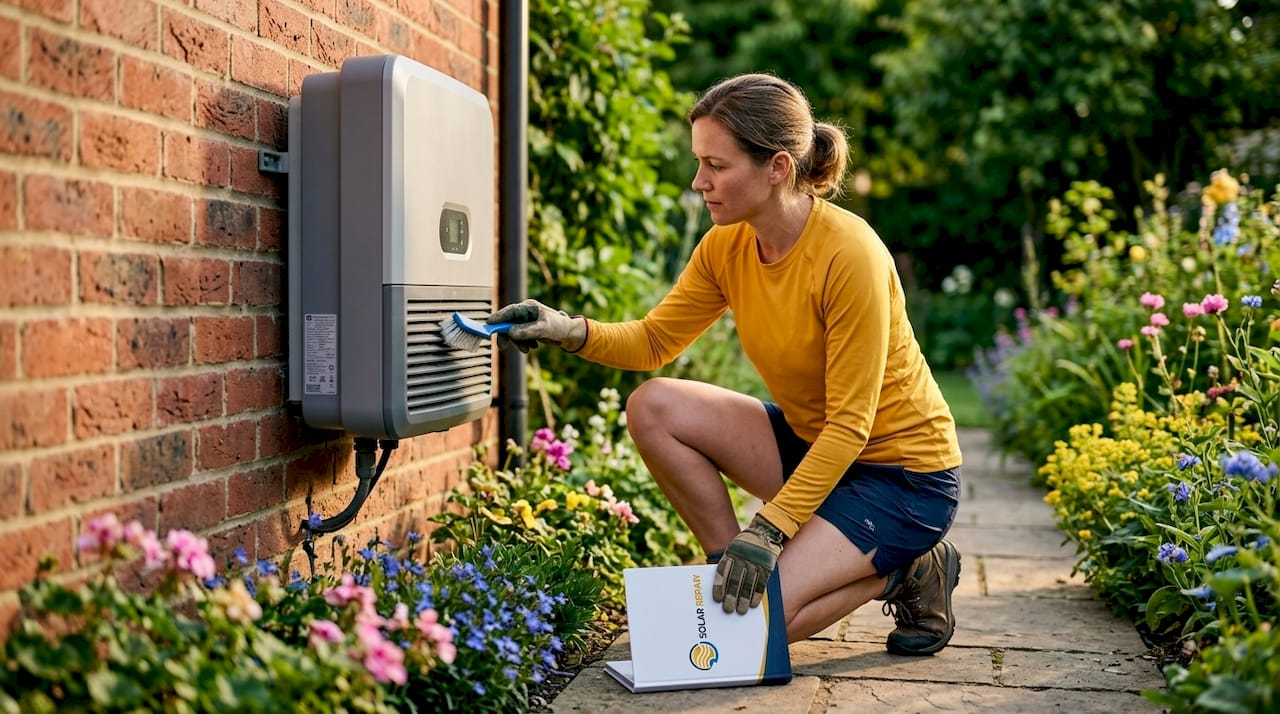
Heat is the inverter's enemy. During peak summer months, check that your inverter's ventilation area is clear of dust or obstructions. If your inverter is in a garage or utility closet, confirm the space is not overheating. Also do a quick check of visible wiring at the junction boxes for any signs of discoloration or pest activity.
Fall inspection (September to October)
Biannual visual inspections in spring and fall are the standard recommendation for residential PV systems. The fall check focuses on hail or storm damage from summer, a second panel cleaning before leaf-fall season, and preparing the system for reduced winter production.
Winter monitoring (November to February)
In snow-prone regions, monitor output closely during and after snowfall. Most panels shed snow naturally. If output stays low for days after a storm, a professional cleaning may be warranted. Do not use metal scrapers or pressure hoses to remove snow from panels.
Pro Tip: Set a recurring calendar reminder on the first day of each month for your monitoring app check. It takes under five minutes and is the single highest-return maintenance habit a solar homeowner can build.
3. Professional solar maintenance services: what to expect and when to schedule
Homeowner tasks cover the visual and monitoring side of solar panel upkeep. Professional inspections go deeper, using tools and training that are not available to most homeowners.
What professionals do that homeowners cannot
- Thermal imaging to identify hotspots or failing cells not visible to the eye
- Electrical testing of string voltage, current output, and grounding integrity
- Inspection of all roof penetrations for water intrusion risks
- Detailed inverter diagnostic testing beyond app-level error codes
- Assessment of mounting hardware torque and structural integrity
Service frequency by schedule type
| Schedule Type | Recommended For | Typical Cost | Key Benefit |
|---|---|---|---|
| Annual inspection | Most residential systems | $150 to $300 | Baseline health check and cleaning |
| Semi-annual inspection | Coastal, dusty, or shaded sites | $300 to $600/year | Catches seasonal and environmental damage faster |
| Every 3 to 5 years (electrical) | All systems | $300 to $500 per visit | Deep electrical and structural assessment |
| Inverter replacement service | String inverter systems at year 12 to 15 | Varies by system size | Restores full system performance |
Systems near coastlines or with heavy tree cover may benefit from twice-yearly professional servicing to prevent compounded damage from salt air or debris accumulation.
Best time to schedule professional visits
Annual professional inspections are most accurate when scheduled during high-output seasons, typically late summer or early fall. The system is producing peak voltage and current, which allows technicians to take precise electrical measurements that reflect real operating conditions.
When coordinating professional visits, share your monthly monitoring logs with the technician. This gives them trend data that a single-visit snapshot cannot capture.
4. Comparing maintenance schedules based on your system and site
Different systems and environments genuinely require different scheduling. This comparison helps you decide which approach fits your situation.
| Factor | Standard Schedule | Adjusted Schedule |
|---|---|---|
| Location | Low-dust, moderate climate | Coastal, dusty, or high-pollen area |
| Cleaning frequency | 1 to 2 times per year | 3 to 4 times per year |
| Professional visits | Annual | Semi-annual |
| Inverter monitoring | Monthly app check | Monthly app check plus seasonal review |
| Inverter replacement plan | Budget from year 10 onward | Budget from year 10; check microinverter units individually |
| Monitoring data review | Monthly | Monthly with seasonal threshold comparison |
| Warranty alignment | Check terms at year 5 and 10 | Check terms annually after year 7 |
String inverter replacement typically occurs once per system lifetime, around years 12 to 15. Microinverters have a longer lifespan of approximately 25 years, but individual units can fail and should be tracked through your monitoring app for per-panel output anomalies.
Using your monitoring data to adjust the schedule is not optional. If your app shows output dips or monitoring errors, that is a trigger for an out-of-cycle inspection or cleaning, not a reason to wait for the next scheduled visit.
For homeowners with battery backup systems, maintenance scheduling expands to include battery health checks. The battery backup system adds components that require their own inspection and software update checks alongside the solar array.
5. Tips for optimizing your solar maintenance schedule
Getting the most out of your schedule comes down to consistency, safety, and smart use of data.
- Use the right cleaning tools. A soft brush, mild dish soap, and low-pressure water are all you need. Pressure washers and abrasive cleaners can micro-crack panel surfaces and void warranties. Clean panels in the early morning before they heat up to avoid thermal shock.
- Leverage monitoring data. Your monitoring app is the most underused tool in residential solar upkeep. Set output benchmarks for each season and treat deviations greater than 10 to 15% as a trigger for investigation.
- Align cleaning with seasons. The best times for panel cleaning are late spring after pollen season and early fall before winter. These timings also align with biannual visual inspections, making the combined task more efficient.
- Budget for surprises. Routine maintenance costs are predictable. Unexpected repairs, a failed microinverter unit, or rodent-damaged wiring are not. Keep a small maintenance reserve of $200 to $500 separate from your scheduled inspection budget.
- Ask about O&M contracts. If you want a hands-off approach, solar O&M contracts can bundle scheduled visits, monitoring support, and emergency service into a single annual fee. Review the contract terms carefully before committing.
Pro Tip: When you schedule a professional visit, ask the technician to walk you through any findings in person. That conversation will teach you more about your specific system than any generic solar maintenance guide.
My take on the "set-and-forget" myth
I have spoken with hundreds of homeowners who believed their solar installation was fully automated. The panels generate power, the inverter converts it, the bill goes down. No maintenance required.
That mental model ignores what the U.S. Department of Energy makes clear: regular O&M actively prevents soiling, micro-cracking, and corrosion that silently erodes system performance over time. Degradation does not announce itself. It accumulates slowly until a professional visit or a surprisingly high utility bill reveals years of compounded loss.
What I have seen work consistently is a data-first approach. Homeowners who check their monitoring apps monthly catch problems when they are small. Homeowners who wait for an annual inspection often discover that a wiring fault or a failed inverter has been running for months at reduced efficiency.
The other mistake I see with new solar owners is treating professional and DIY maintenance as separate tracks. They work together. Your monthly checks give the professional technician context. The technician's findings refine what you look for in your monthly checks. That feedback loop is where the real value of a structured maintenance routine comes from.
My advice to new solar owners: start simple. Commit to the monthly app check first. Add the biannual visual inspection. Then build toward a professional visit in year one to establish a performance baseline. Everything else follows from that foundation.
— David
How Solarrepairtoday can protect your solar investment
Before you sign a maintenance contract or service agreement, get a second set of eyes on the terms. Solarrepairtoday's solar proposal review service gives homeowners an independent assessment of maintenance proposals, service contracts, and equipment quotes. If a company is recommending services you may not need or omitting coverage you should have, the review process flags it.
Homeowners who are also evaluating financing for system repairs or upgrades can use the contract financing review service to assess whether the terms make sense for their situation. Both services are part of the "Before You Sign" intake program, designed to give you clarity before you commit to any solar agreement.
FAQ
How often should a solar system be professionally inspected?
Most residential systems benefit from an annual professional inspection. Systems in coastal, dusty, or heavily shaded environments may need semi-annual visits to prevent compounded damage from environmental factors.
What does a basic solar maintenance schedule include?
A standard schedule includes monthly monitoring app checks, biannual visual inspections in spring and fall, one to two panel cleanings per year, and a professional electrical inspection every three to five years.
When is the best time for solar maintenance?
Spring and fall are the best times for visual inspections and panel cleaning. Professional inspections are most accurate when scheduled in late summer or early fall during peak production periods.
What should homeowners avoid when cleaning solar panels?
Homeowners should avoid pressure washers, abrasive cleaners, and metal tools. These can crack panel surfaces and void manufacturer warranties. A soft brush and mild soapy water applied in the early morning is the recommended approach.
How do I know if my solar system needs an out-of-cycle inspection?
If your monitoring app shows output drops greater than 10 to 15% from your seasonal baseline, or if you see error alerts from your inverter, schedule an inspection or cleaning outside your regular cycle rather than waiting for the next scheduled visit.