

Most homeowners assume that once solar panels are installed, savings happen automatically. That assumption is expensive. The role of monitoring app in solar decision making is far more significant than a simple dashboard. These tools give you real-time visibility into how your system performs, where energy is being lost, and how to cut costs further. They influence what equipment you buy, how you use power, and whether your installer is delivering what they promised. This guide covers the data, the decisions, and the financial impact.
Table of Contents
- Key takeaways
- The role of monitoring apps in solar decisions
- How apps detect faults and protect system health
- Optimizing energy use through monitoring data
- Choosing the right solar monitoring app
- What monitoring apps will do next
- My take on monitoring as a solar essential
- Get an expert review before you commit
- FAQ
Key takeaways
| Point | Details |
|---|---|
| Apps do more than track | Solar monitoring software actively shapes buying decisions, usage habits, and maintenance timing. |
| Fault detection saves money | Monitoring apps catch shading, inverter errors, and panel degradation before losses compound. |
| Load shifting drives savings | Syncing high-draw appliances with peak solar production reduces grid consumption and lowers bills. |
| Panel-level data matters | System-level monitoring alone misses underperforming panels; granular diagnostics are more accurate. |
| App selection affects ROI | Choosing the right app based on inverter compatibility and feature set directly impacts financial returns. |
The role of monitoring apps in solar decisions
Solar monitoring software collects data from multiple hardware sources: string inverters, microinverters, power optimizers, and consumption meters. Each source contributes a different layer of information. String inverters report the full system output. Microinverters and power optimizers add panel-level data, which is the only way to identify whether one panel is underperforming while the rest operate normally.
The types of data available vary by platform. Real-time production, historical output trends, household consumption, grid export, and grid import are the core metrics. How often that data updates matters. 5 to 15-minute intervals are the standard for actionable monitoring. Apps that only refresh hourly give you a blurry picture, too delayed to catch acute faults before they drain production for hours.
Here are the primary data inputs most monitoring platforms draw from:
- Inverter output data. String inverters report aggregate system production in real time.
- Microinverter or optimizer data. Panel-level output that isolates individual performance.
- Consumption meters. Whole-home energy use tracked separately from solar generation.
- Grid exchange data. Measures energy exported to the grid and imported from it.
- Battery state of charge. Tracks storage levels when a battery system is installed.
Most major inverter brands ship with a proprietary app. Third-party platforms like Sense and Emporia Vue add appliance-level detection for deeper consumption insight, but they require additional hardware and setup investment.
How apps detect faults and protect system health
PV systems are exposed to conditions that degrade output constantly. Global average energy losses hit 26.9% in 2023, with clouds accounting for 21.1% and aerosols adding another 5.8%. Environmental losses are expected. What is not acceptable is letting equipment faults compound those losses undetected for months.
Monitoring apps catch problems that visual inspections miss entirely. Here is how fault detection works in practice:
- Inverter error alerts. Apps flag inverter faults in real time, often before a homeowner notices any change in their electricity bill.
- Shading analysis. Panel-level data shows when a single panel drops production, which can indicate new shading from a growing tree or debris accumulation.
- Degradation trending. Comparing output over months and years against expected performance curves identifies gradual panel degradation.
- DC imbalance detection. Subtle DC imbalances or wiring issues are routinely missed by system-level monitoring and require granular diagnostics to surface.
- Production gap alerts. Apps that track expected vs. actual output alert homeowners when generation falls short of weather-adjusted targets.
The financial impact is real. A single malfunctioning panel in a 10-panel system can reduce output by 10% or more if the system uses a string inverter without power optimizers. Over a year, that loss adds up to hundreds of dollars in missed savings. App alerts allow you to catch the fault within days, not months.
Monitoring data also strengthens warranty claims. When you can document performance history with timestamped output records, it is far easier to hold an installer or manufacturer accountable under warranty terms.
Pro Tip: Set your monitoring app's alert threshold to notify you when daily production drops more than 15% below weather-adjusted expectations. Most apps allow custom alert configuration, and this single setting can save you hundreds per year in undetected losses.
Optimizing energy use through monitoring data
The importance of solar apps extends well beyond fault detection. The most financially impactful use of monitoring data is changing when and how you consume energy.
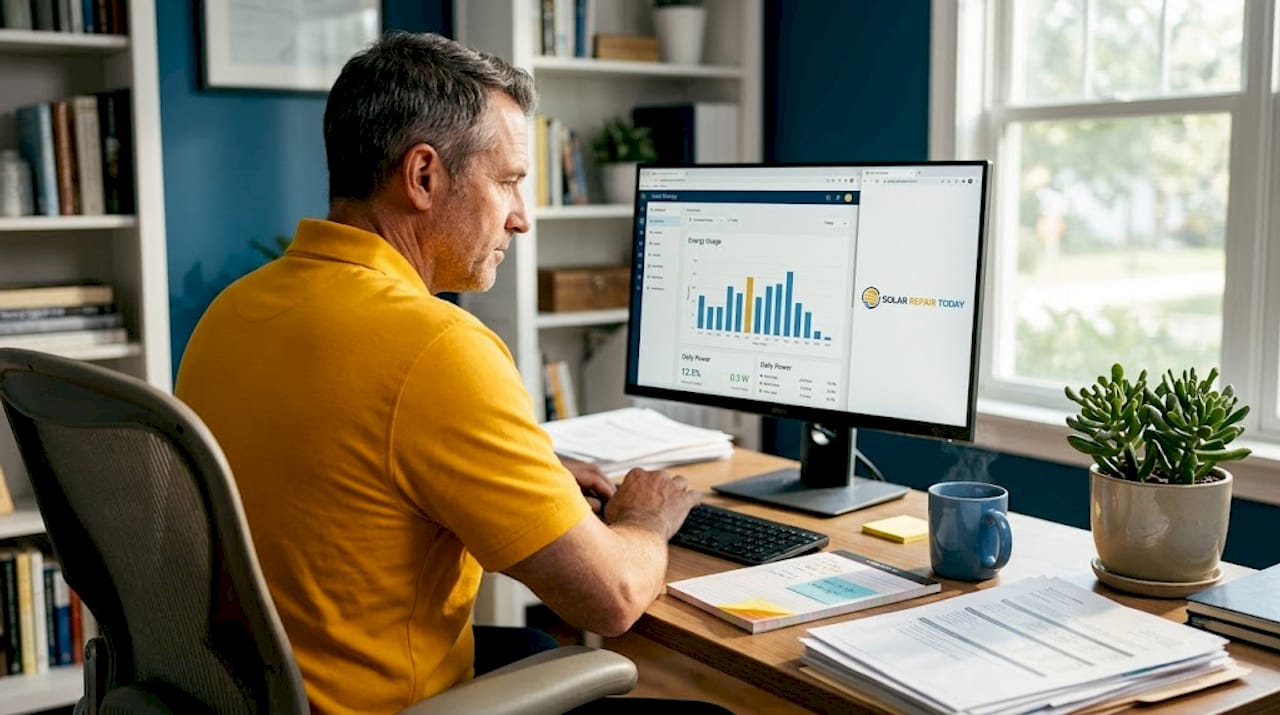
Understanding your household consumption patterns through the app is the first step. When you see that your dishwasher, washing machine, and EV charger all run in the evening, you also see that you are buying grid power instead of using free solar energy you generated at noon. That behavioral insight alone is worth money.
Load shifting is the practice of moving high-draw appliances to peak solar production hours. Monitoring apps support this with several practical tools:
- Tariff integration. Apps that accept your utility rate structure can model time-of-use costs and show exactly what each load costs under current conditions.
- Smart control automation. Integration with smart plugs, smart thermostats, and EV charger controllers allows the app to automate load shifting without requiring manual scheduling each day.
- Battery dispatch optimization. Apps manage when the battery charges, holds, and discharges to minimize grid purchases.
- Solar divert for hot water. Automated solar divert routes surplus solar to water heaters and EV chargers based on real-time generation data, maximizing self-consumption before excess energy hits the grid at low export rates.
If you are dealing with a high electric bill despite having solar, the app is the diagnostic tool that reveals whether the problem is a production fault, a consumption spike, or an export rate issue.
Pro Tip: Before you sign a solar contract, ask the installer which monitoring platform the system will use and whether it supports tariff integration and smart load control. These features affect your long-term savings more than the panel brand in most residential scenarios.
ROI tracking is another underused feature. Premium monitoring platforms show cumulative energy savings, lifetime CO2 offset, and cost savings compared to projected grid purchases. These visualizations help you verify that the system is delivering what the proposal promised. They also give you concrete data if you ever need to dispute performance shortfalls with your installer.
Choosing the right solar monitoring app
Not every monitoring solution fits every system or homeowner. The right app depends on your inverter hardware, your goals, and what you are willing to invest in additional tools.
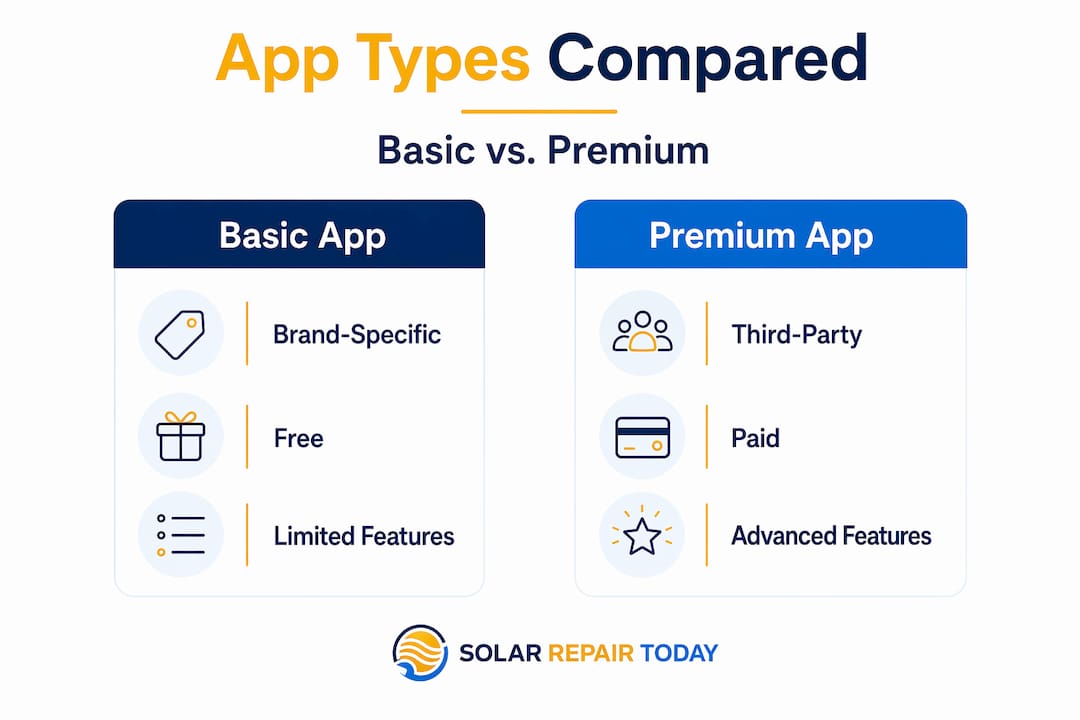
| Feature | Basic app (free, brand-specific) | Premium or third-party app |
|---|---|---|
| Data update frequency | 15 minutes to hourly | 5 minutes or real-time |
| Panel-level diagnostics | Only with microinverters or optimizers | Available with add-on hardware |
| Tariff and TOU modeling | Limited or absent | Full integration with utility rates |
| Smart home integration | Minimal | EV, battery, thermostat control |
| Historical data export | Basic CSV | Detailed export for warranty or analysis |
| Cost | Free | Paid tier or hardware add-on required |
Premium app features like time-of-use cost modeling and data export are often locked behind paid tiers or require third-party hardware. For most homeowners with a standard grid-tied system, the free brand app covers basic monitoring adequately. For homeowners with batteries, EVs, or complex tariff structures, upgrading to a platform with automation and tariff integration pays for itself quickly.
Compatibility is non-negotiable. A monitoring platform built for one inverter brand will not work cleanly with another. Before committing to a system, confirm that the inverter and monitoring app are designed to work together. Switching monitoring platforms after installation often requires additional hardware and setup costs.
User experience also affects whether you actually use the app. An app with poor design or confusing navigation gets ignored. When the app gets ignored, faults go undetected and savings opportunities disappear. Prioritize apps with clear alert systems, intuitive dashboards, and historical trend views.
What monitoring apps will do next
Solar apps are shifting from passive dashboards to active energy control hubs. The next generation of solar energy decision tools does not just show you what happened. It makes decisions on your behalf.
Weather forecast integration is already live in several platforms. Apps now use forecast data to adjust battery schedules dynamically, pre-charging storage before a cloudy stretch and discharging strategically during peak pricing windows. This is set-and-forget optimization that previously required manual intervention daily.
"Monitoring apps are being repositioned as energy orchestrators that unify multiple home energy components into automated efficiency ecosystems." — Energy Matters
Virtual power plant participation is another expansion. Some platforms now coordinate your battery with a utility grid program, dispatching stored energy during peak demand events and paying you for the service. The app manages the entire transaction. Unified control of EV charging, thermal loads, and battery storage through a single interface represents the direction the industry is moving, and homeowners who choose systems with capable monitoring apps today will be positioned to access those benefits as the features roll out.
My take on monitoring as a solar essential
I've spent years reviewing solar proposals and system performance data, and the pattern is consistent. Homeowners who treat their monitoring app as an afterthought lose money they cannot see. The losses are quiet. A panel producing 8% below spec does not trip an alarm. An inverter clipping output during peak hours does not show up on an electricity bill in a way that is obviously connected to the solar system.
What I've learned is that the financial case for solar is built on assumptions. The proposal assumes your system will produce X kilowatt-hours per year. The monitoring app is the only tool that tells you whether those assumptions are holding. When they are not, early detection through the app is the difference between catching a fixable fault and absorbing years of compounding underperformance.
In my experience, homeowners consistently underutilize monitoring capabilities. They check the app once after installation, see a green light, and never log in again. The app stays untouched while subtle degradation or a misconfigured setting quietly reduces returns. Checking the app monthly, reviewing trends quarterly, and acting on alerts promptly is as important as the panels themselves. The monitoring app is not an accessory. It is the feedback loop that makes solar ownership financially rational.
— David
Get an expert review before you commit
When you are evaluating a solar proposal, the monitoring platform the installer includes is as important as the panels and inverter on the spec sheet. A system with weak monitoring capabilities will cost you more over time, regardless of panel efficiency ratings.
Solarrepairtoday helps homeowners get an independent review of their solar proposals before signing. Through the Before You Sign intake program, you can submit your quote, utility bill, or project details for a diagnostic review that covers pricing, equipment, system sizing, battery options, and potential red flags. If monitoring app features, financing terms, or battery storage integration are part of your proposal, the review checks whether those elements are sized and specified correctly for your home and goals.
FAQ
What is the role of a monitoring app in solar decisions?
A solar monitoring app provides real-time performance data, fault detection, and consumption analysis that directly informs decisions about system maintenance, energy usage, and whether a solar investment is delivering promised returns.
How do monitoring apps improve solar efficiency?
Apps improve efficiency by alerting homeowners to faults, automating load shifting to peak production hours, and optimizing battery dispatch. Granular diagnostics catch underperformance that system-level data alone misses.
Do I need panel-level monitoring?
Panel-level monitoring is strongly recommended if your system uses microinverters or power optimizers. Basic inverter apps only provide system-level data, which cannot isolate a single underperforming panel without panel-level hardware.
How often should a solar monitoring app update data?
Apps should update every 5 to 15 minutes for meaningful fault detection. Hourly updates are too infrequent to catch acute faults before significant production is lost.
Can a monitoring app help with warranty claims?
Yes. Apps that export historical performance data provide timestamped documentation of output shortfalls, which is critical evidence for warranty claims against installers or panel manufacturers.